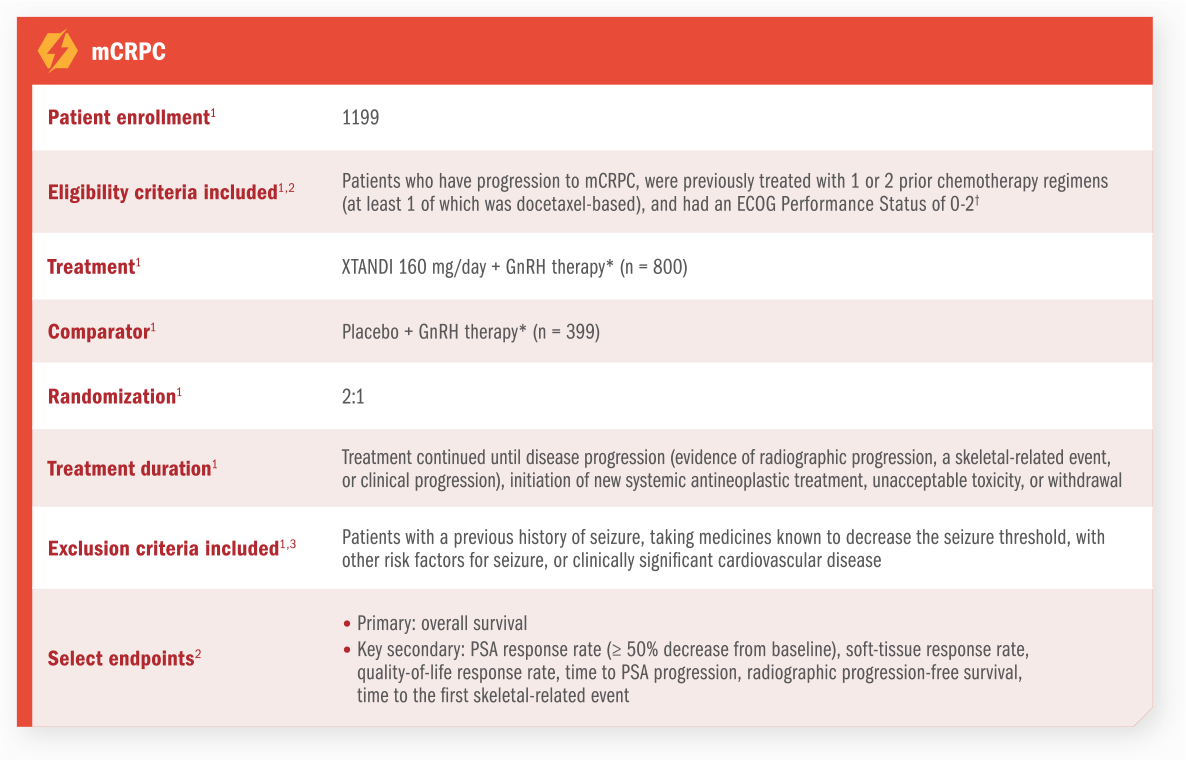
ARCHES: adverse reactions1
OCCURRED AT ≥2% HIGHER FREQUENCY IN THE XTANDI + GnRH THERAPY* ARM THAN IN THE PLACEBO + GnRH THERAPY* ARM
PRIMARY ANALYSIS
Data cutoff October 14, 2018.2
*Or after bilateral orchiectomy.1
†CTCAE version 4.03.
‡Includes memory impairment, amnesia, cognitive disorder, dementia, disturbance in attention, transient global amnesia, dementia Alzheimer's type, mental impairment, senile dementia, and vascular dementia.
§Includes asthenia and fatigue.
‖Includes fracture-related preferred terms under high-level terms, fractures NEC, fractures and dislocations NEC, limb fractures and dislocations, pelvic fractures and dislocations, skull and brain therapeutic procedures, skull fractures, facial bone fractures and dislocations, spinal fractures and dislocations, and thoracic cage fractures and dislocations.
PERMANENT DISCONTINUATION DUE TO ADVERSE REACTIONS AS THE PRIMARY REASON1
PRIMARY ANALYSIS
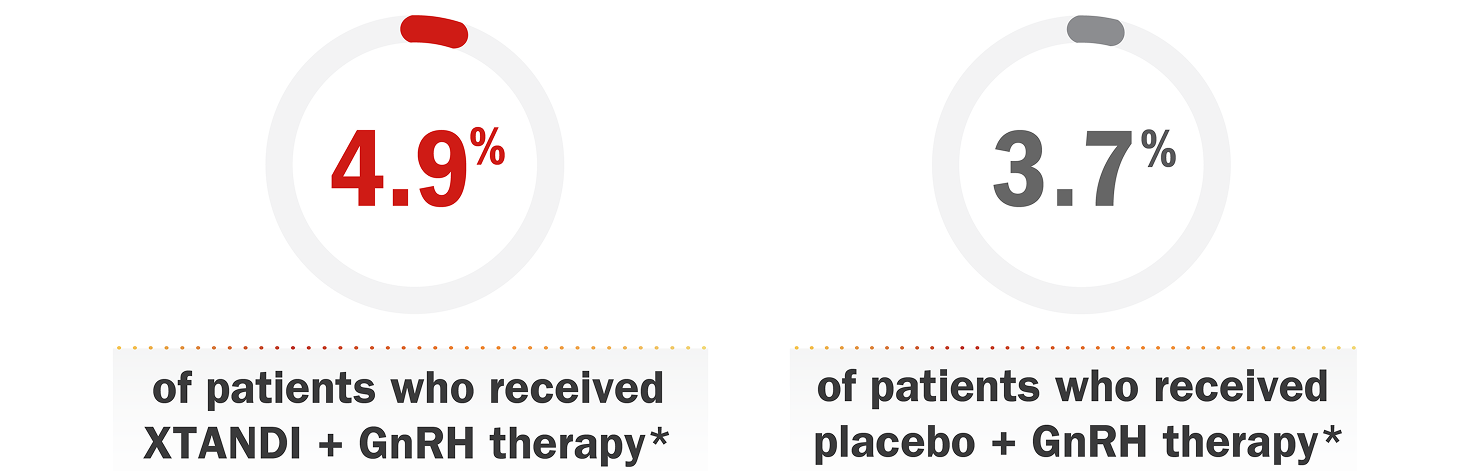
Data cutoff October 14, 2018.2
- The most common adverse reactions resulting in permanent discontinuation were alanine aminotransferase increased, aspartate aminotransferase elevation, and seizure, each in 0.3% of XTANDI + GnRH therapy*–treated patients1
*Or after bilateral orchiectomy.1
PRIMARY ANALYSIS
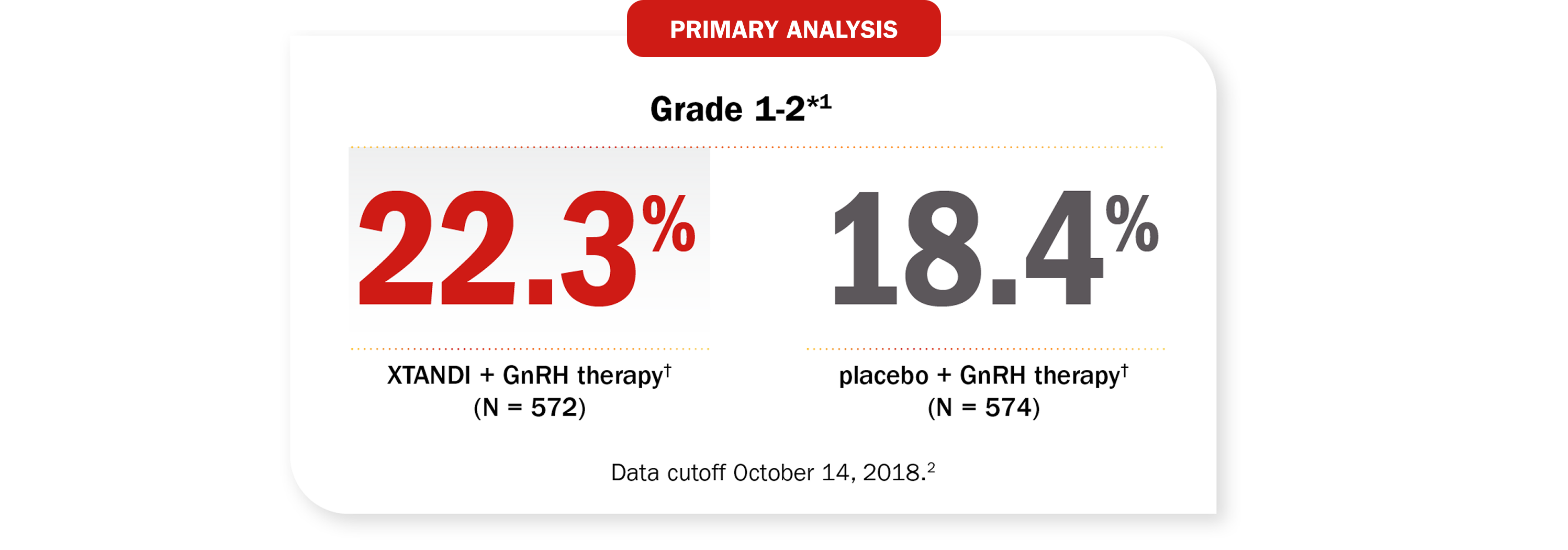
Grade 1 (mild): mild or no symptoms; intervention generally not needed5
Grade 2 (moderate): some intervention may be needed; may limit certain daily activities5
PRIMARY ANALYSIS
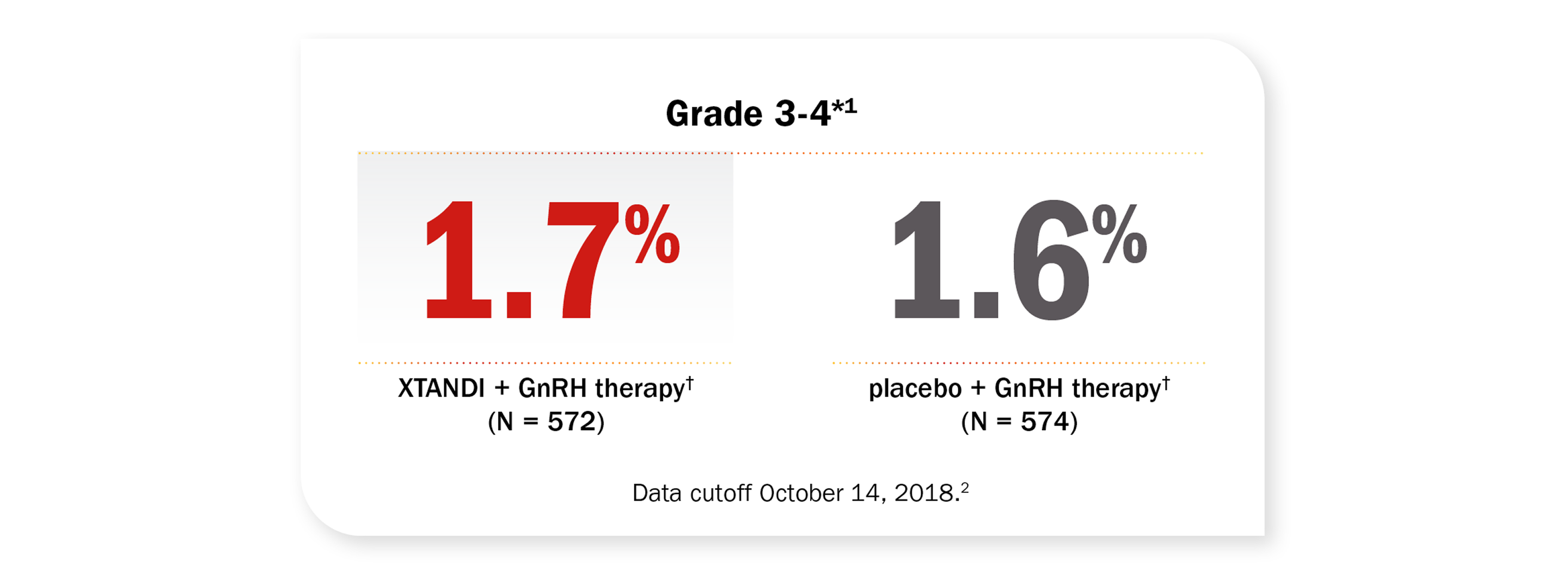
Grade 3 (severe): medically significant; may require hospitalization and limits daily activities5
Grade 4 (life-threatening): urgent medical intervention required5
CONSIDERATIONS FOR MANAGING FATIGUE

Are any of your medications making your fatigue worse, and are you able to plan meals, hydration, and activities around the times of day when you have the most energy?6

Are you keeping a consistent sleep schedule, limiting daytime naps, and avoiding exercise later in the day?7

Are you staying physically active in a way that feels manageable for you during treatment?6
*Includes asthenia and fatigue.1
†Or after bilateral orchiectomy.1
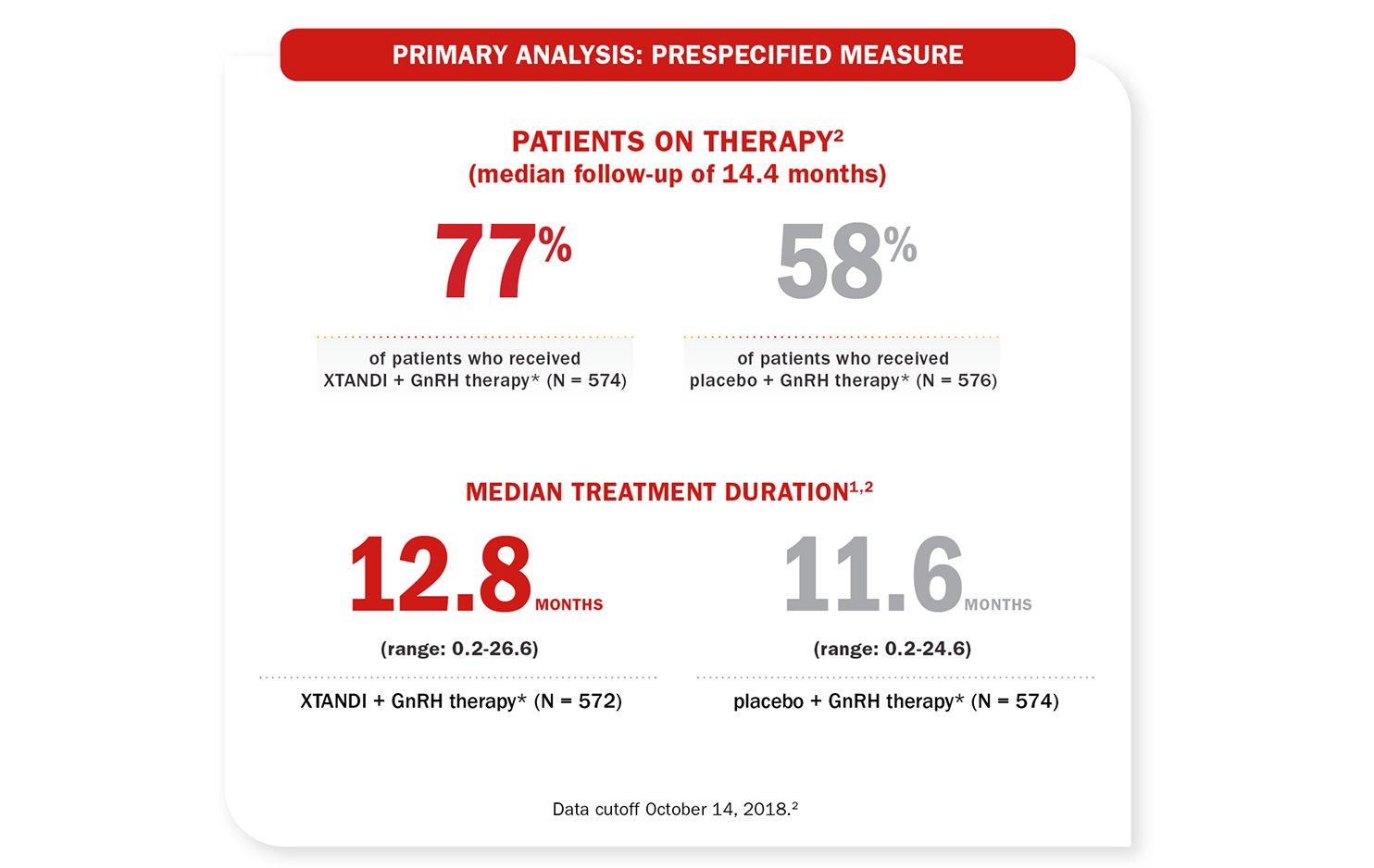
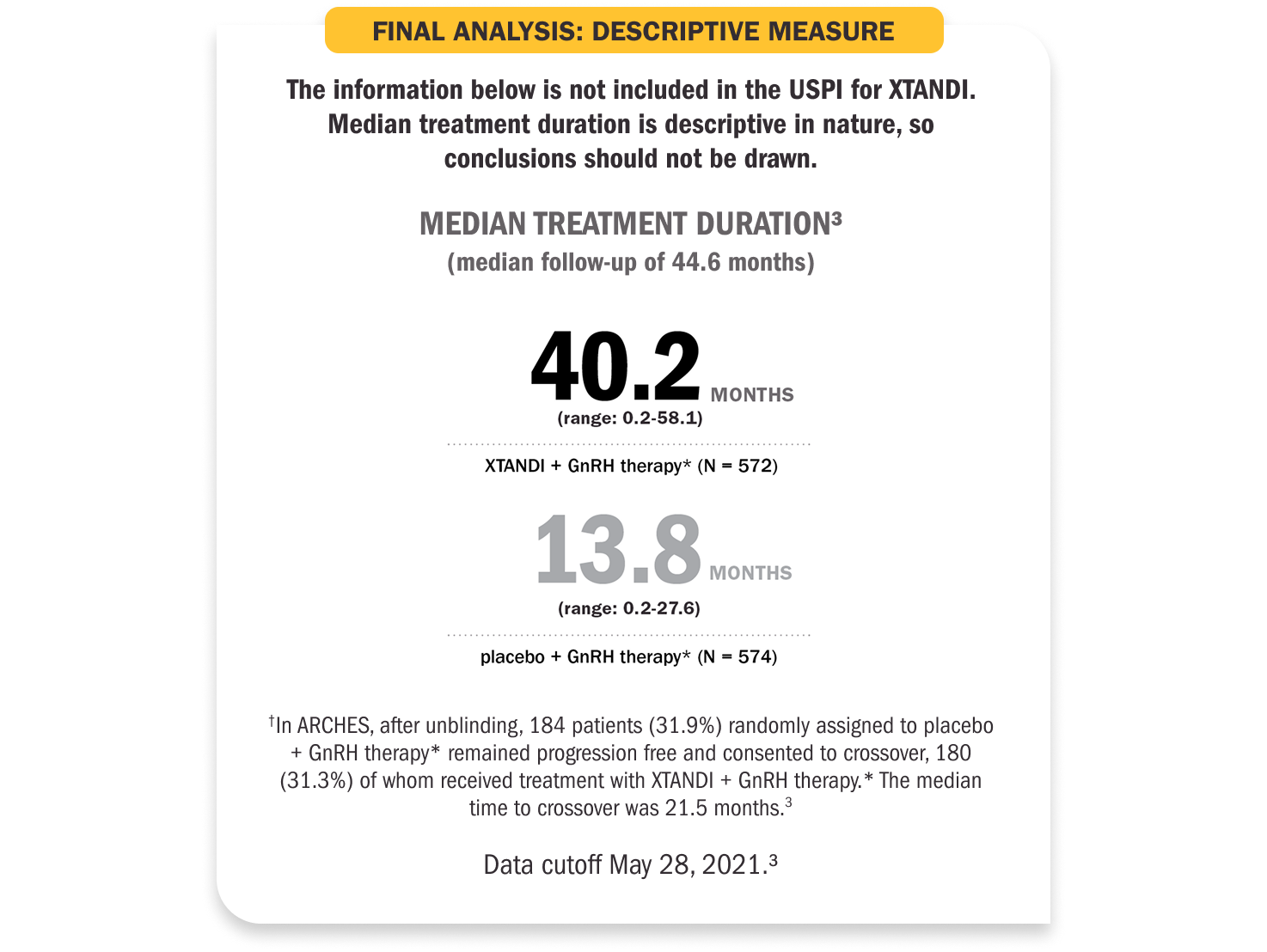
A durable treatment option for patients with mCSPC1-3
*Or after bilateral orchiectomy.1

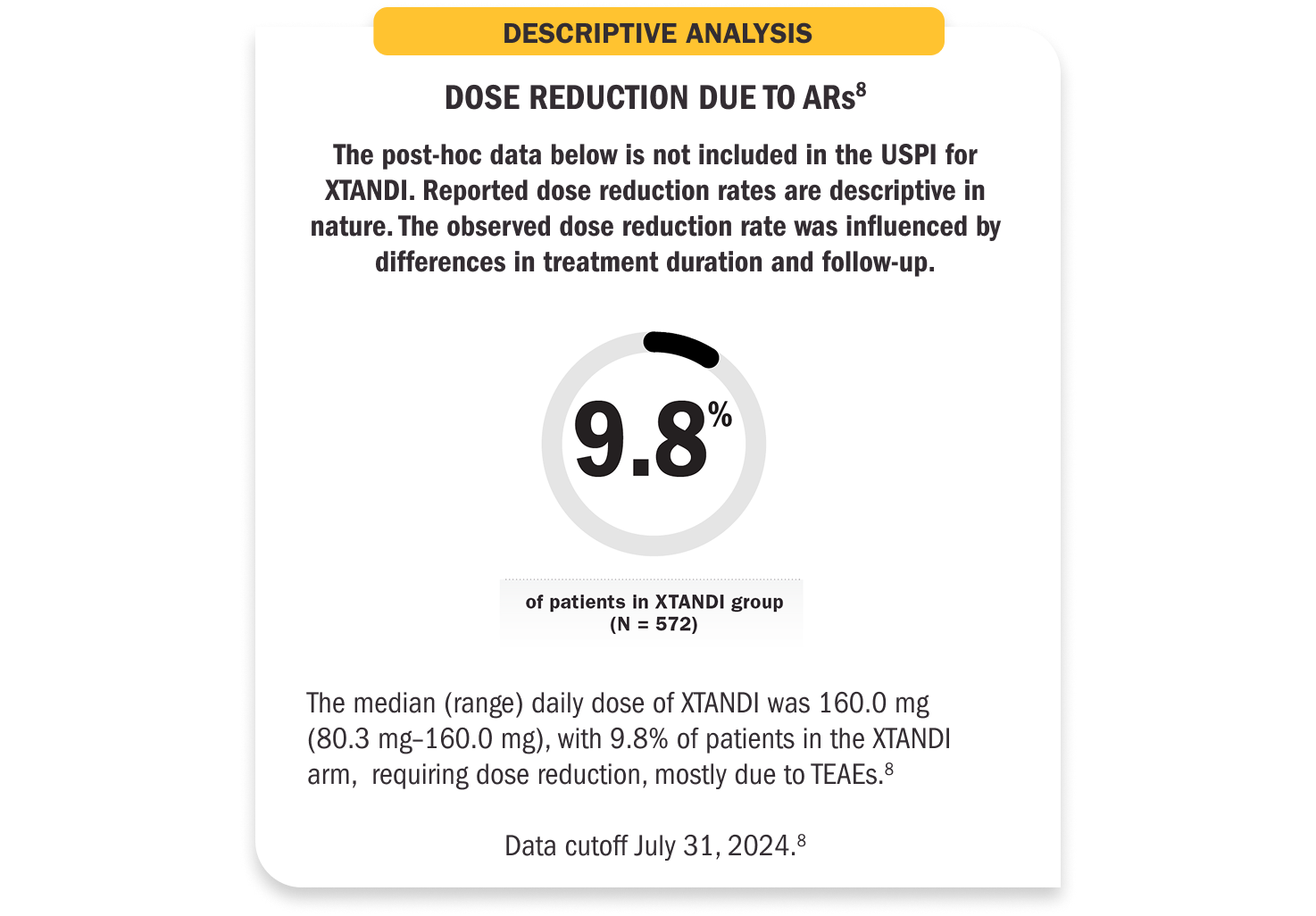
If a patient experiences a ≥ Grade 3 or an intolerable adverse reaction, withhold XTANDI for 1 week or until symptoms improve to ≤ Grade 2, then resume at the same or a reduced dose (120 mg or 80 mg) if warranted.1
*Or after bilateral orchiectomy.1
EMBARK: adverse reactions
OCCURRED AT ≥5% (GRADE 1-4) OR ≥2% (GRADE 3-4) HIGHER FREQUENCY IN EITHER OF THE XTANDI ARMS THAN IN THE PLACEBO + GnRH THERAPY* ARM1
PRIMARY ANALYSIS
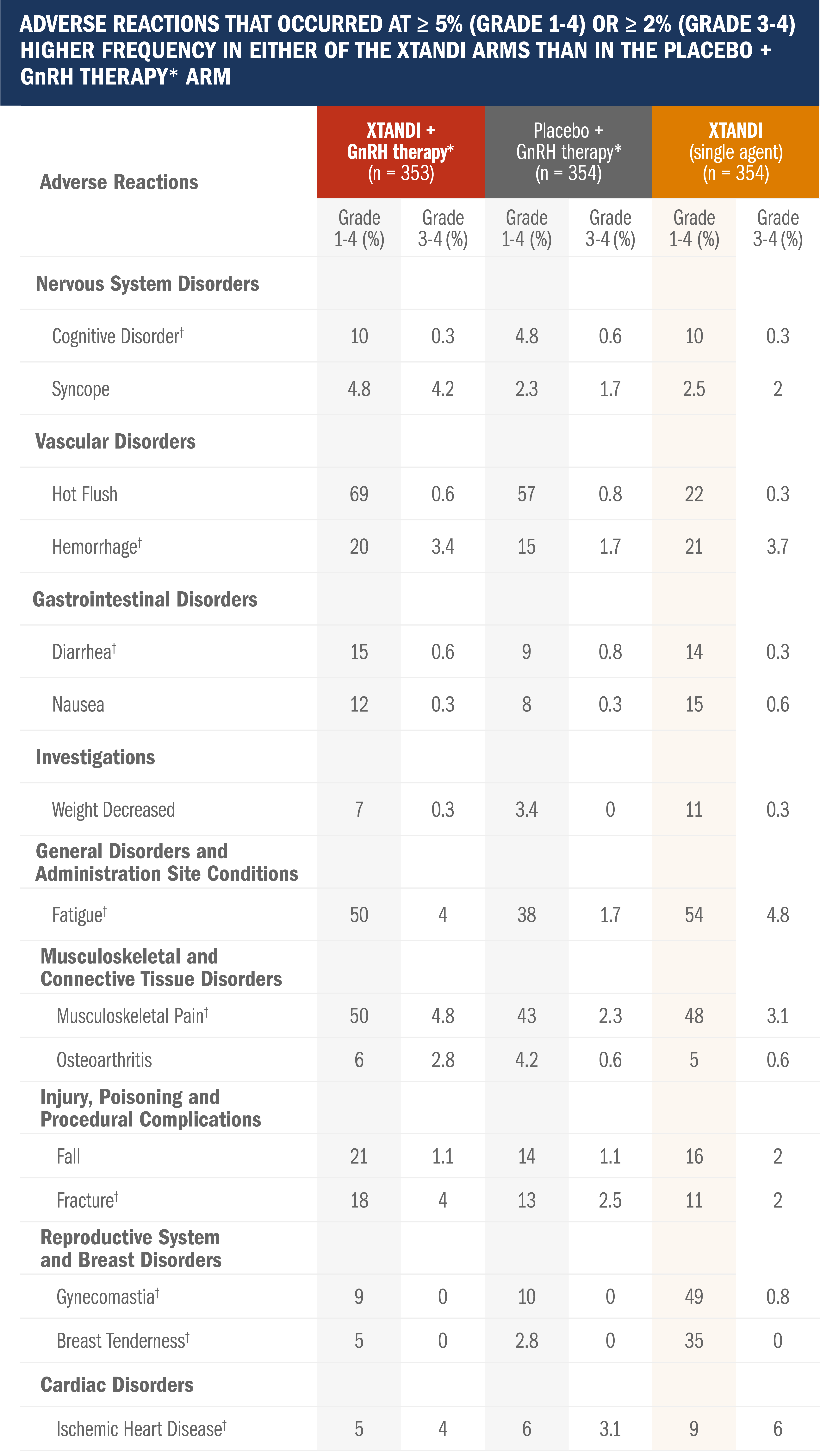
Data cutoff January 31, 2023.2
Adverse reactions were graded according to the CTCAE version 4.03.
*Leuprolide.1
†Includes multiple terms.
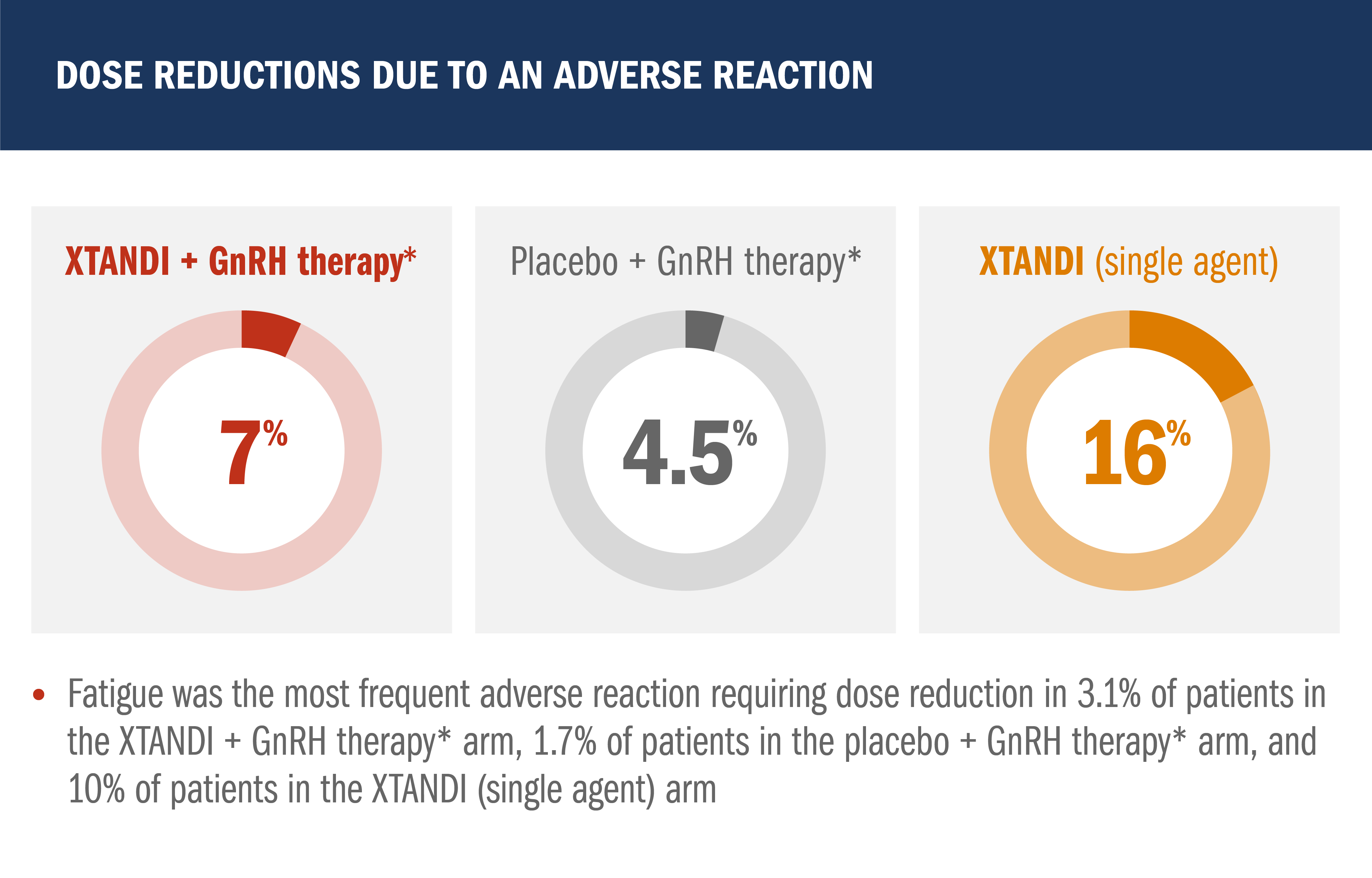
DOSE REDUCTIONS DUE TO AN ADVERSE REACTION1
PRIMARY ANALYSIS
Data cutoff January 31, 2023.2
- Fatigue was the most frequent adverse reaction requiring dose reduction in 3.1% of patients in the XTANDI + GnRH therapy* arm, 1.7% of patients in the placebo + GnRH therapy* arm, and 10% of patients in the XTANDI (single agent) arm1
- Median total duration of treatment was 60.6 months (range: 0.1-90.4 months) with XTANDI + GnRH therapy,* 55.6 months (range: 0.7-94.1 months) with placebo + GnRH therapy,* and 60.4 months (range: 0.4-95.0) with XTANDI (single agent)1
- Median duration of drug treatment was 32.4 months (range: 0.1-83.4 months) with XTANDI + GnRH therapy,* 35.4 months (range: 0.7-85.7 months) with placebo + GnRH therapy,* and 45.9 months (range: 0.4-88.9) with XTANDI (single agent)1
- Grade 3 or higher adverse reactions during total duration of treatment were reported in 46% of patients treated with XTANDI + GnRH therapy,* 43% of patients receiving placebo + GnRH therapy,* and 50% of patients receiving XTANDI (single agent)1
*Leuprolide.1
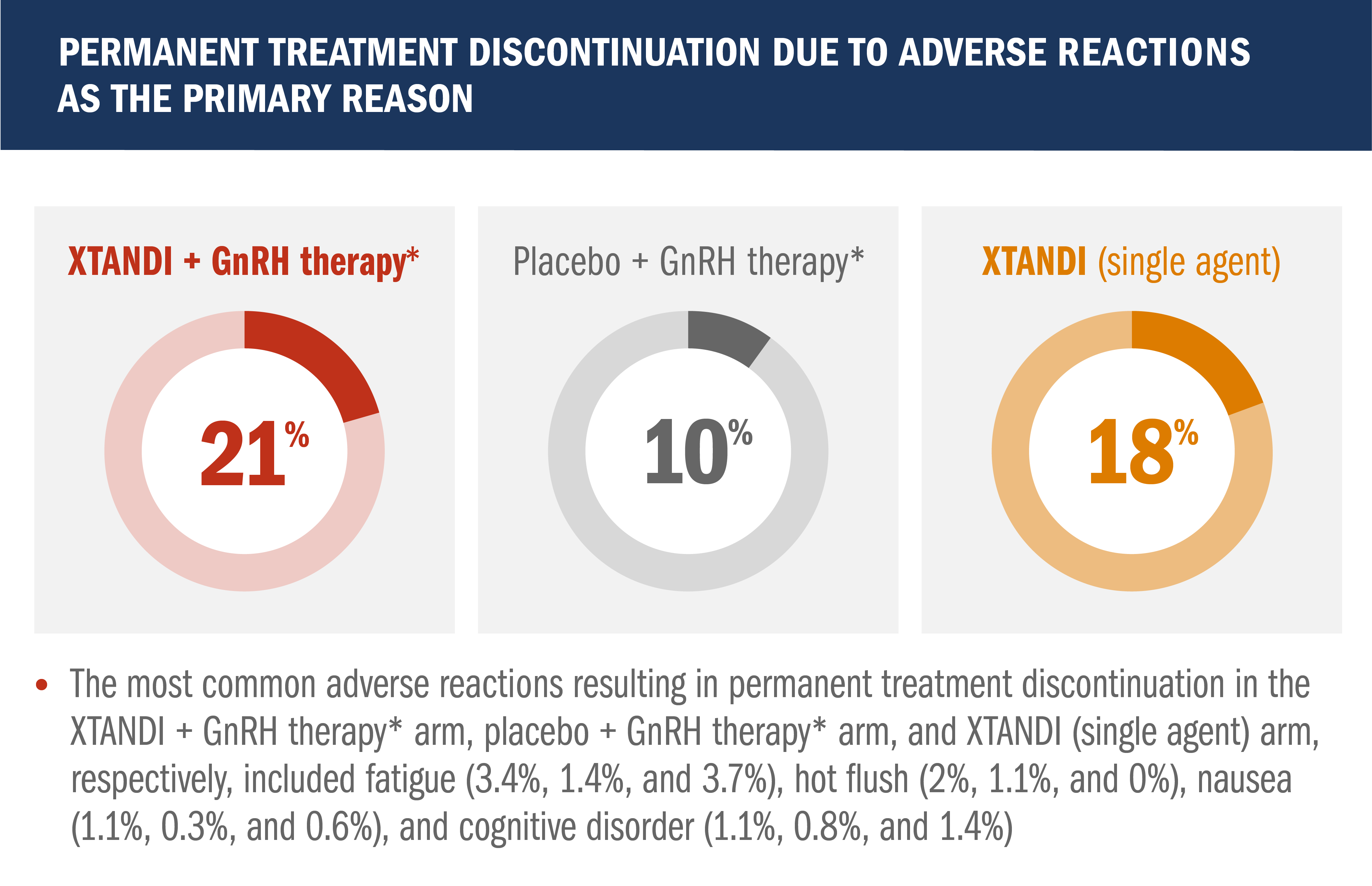
PERMANENT TREATMENT DISCONTINUATION DUE TO ADVERSE REACTIONS AS THE PRIMARY REASON1
PRIMARY ANALYSIS
Data cutoff January 31, 2023.2
- The most common adverse reactions resulting in permanent treatment discontinuation in the XTANDI + GnRH therapy* arm, placebo + GnRH therapy* arm, and XTANDI (single agent) arm, respectively, included fatigue (3.4%, 1.4%, and 3.7%), hot flush (2%, 1.1%, and 0%), nausea (1.1%, 0.3%, and 0.6%), and cognitive disorder (1.1%, 0.8%, and 1.4%)1
*Leuprolide.1